
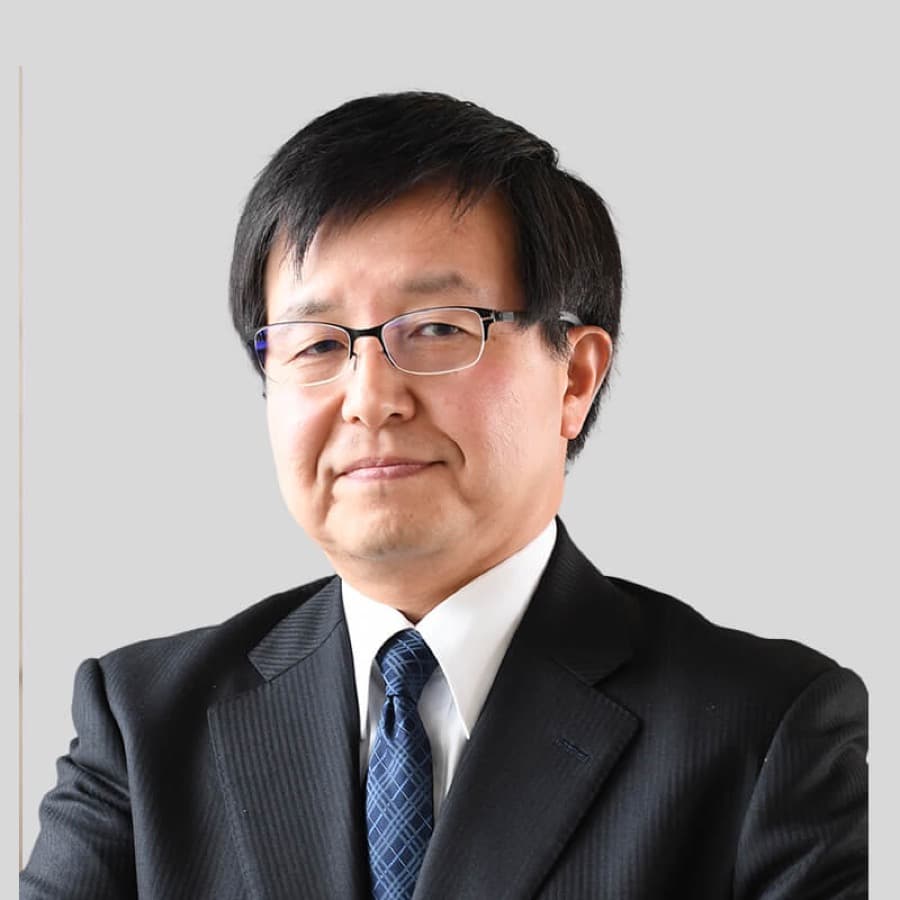
Prof. Tatsuya Ishikawa
石川达也教授
日本北海道大学工学院教授;ISSMGE交通岩土工程技术委员会TC202主席
Lecture
面向可持续与韧性高速铁路的交通岩土工程
Transportation Geotechnics toward Sustainable and Resilient High-Speed Railways
Biography
嘉宾介绍
石川达也教授现任日本北海道大学工学院教授,获京都大学工学学士、硕士和博士学位。在进入高校前,他曾在东日本旅客铁道株式会社工作约15年,其中7年借调至铁道综合技术研究所,从事铁路基础设施岩土设计、维护和安全评估。
自2002年加入北海道大学以来,他重点研究交通岩土工程、冻胀现象以及寒冷多雪地区地质灾害防治。其研究综合采用试验、理论和数值方法,分析冻融、降雨入渗和循环荷载作用下岩土材料的热—水—力行为。近年来,他还开展降雨与融雪诱发边坡失稳、高速铁路道砟行为、降雨型滑坡数据驱动风险评估,以及气候变化条件下交通基础设施合理设计与维护等研究。
石川教授已发表80余篇同行评议期刊论文、120余篇国际会议论文和11部著作,并在重要国际会议作40余次邀请或主题报告。他现任ISSMGE交通岩土工程技术委员会TC202主席,同时在日本岩土工程学会和多本国际期刊担任学术职务,并曾领导北海道重大暴雨和地震灾害后的调查工作。
Lecture Abstract
报告摘要
中文内容根据会务组提供的英文Biography与Abstract整理。
高速铁路系统的发展需要创新的岩土工程方法,以保障基础设施的安全性、耐久性和可持续性。交通岩土工程通过轨道与路面基础设施的设计、施工、性能评估和长期维护研究,为实现这一目标提供基础支撑。
报告结合ISSMGE TC202的重点方向,介绍轨道—路基体系性能化设计、先进室内与现场试验、长期监测与数据解释、动荷载数值建模以及可持续材料利用等方面的最新进展。新兴研究还包括利用图像分析、传感器和人工智能实现道砟与路基检查的自动化、数字化,以提高养护效率。
报告同时讨论高速和循环荷载下的变形、老化材料劣化以及含水变化等环境影响,并说明如何通过试验、建模和监测的协同发展,支持全球可持续、韧性和智能高速铁路基础设施建设。
Biography — English+
Tatsuya Ishikawa is a Professor at the Faculty of Engineering, Hokkaido University, Japan. He received his Bachelor, Master, and Doctor of Engineering degrees from Kyoto University. Before joining academia, he worked for about 15 years at East Japan Railway Company, including a seven-year secondment to the Railway Technical Research Institute (RTRI), where he was involved in geotechnical design, maintenance, and safety assessment of railway infrastructures. Since joining Hokkaido University in 2002, he has been conducting research on transportation geotechnics, frost heave phenomena, and geo-disaster prevention in cold and snowy regions.
His research integrates experimental, analytical, and numerical approaches to evaluate the thermo-hydro-mechanical behavior of geomaterials subjected to freeze–thaw, rainfall infiltration, and cyclic loading. His recent studies focus on rainfall- and snowmelt-induced slope instability, high-speed rail ballast behavior, and data-driven risk assessment for rainfall-induced landslides. Building on these studies, his group has extended their work toward the integration of rational design and maintenance of transportation infrastructure with disaster prevention and mitigation under changing climate conditions, aiming to establish performance-based frameworks that enhance the durability, safety, and efficiency of transportation systems in cold regions.
Prof. Ishikawa has published more than 80 peer-reviewed journal papers, 120 international conference papers, and 11 books, and has delivered over 40 invited and keynote lectures at major international conferences. His recent contributions also include the rational design and maintenance of asphalt pavement structures considering climate change, which support sustainable and resilient infrastructure planning in cold regions.
He currently serves as Chair of Technical Committee 202 on Transportation Geotechnics of the ISSMGE for the 2022–2026 term, after serving as its Secretary from 2013 to 2021. He is also Chair of the TC202 Japanese Domestic Committee of the Japanese Geotechnical Society and serves on the editorial boards of several leading journals, including Transportation Geotechnics.
As a leader of post-disaster survey teams following the 2016 Hokkaido heavy rainfall and the 2018 Hokkaido Eastern Iburi earthquake, Prof. Ishikawa has contributed to improving regional resilience and disaster mitigation.
Abstract — English+
The advancement of high-speed railway systems demands innovative geotechnical approaches to ensure safety, durability, and sustainability. Transportation Geotechnics contributes fundamentally to this goal through research on design, construction, performance evaluation, and long-term maintenance of rail and pavement infrastructure. In line with the objectives of ISSMGE Technical Committee TC202, this paper highlights recent developments in key thematic areas: performance-based design of track–subgrade systems, advanced laboratory and in-situ testing, long-term monitoring and data interpretation, numerical modeling for dynamic loading, and sustainable material use. Emerging studies also focus on the automation and digitalization of ballast and subgrade inspections using image analysis, sensors, and AI-based assessment to improve maintenance efficiency. Current challenges include deformation under high-speed and cyclic loading, degradation of aged materials, and environmental effects such as moisture variation. The paper emphasizes how advances in Transportation Geotechnics, through the integration of testing, modeling, and monitoring, can support the realization of sustainable, resilient, and smart high-speed railway infrastructure worldwide.