
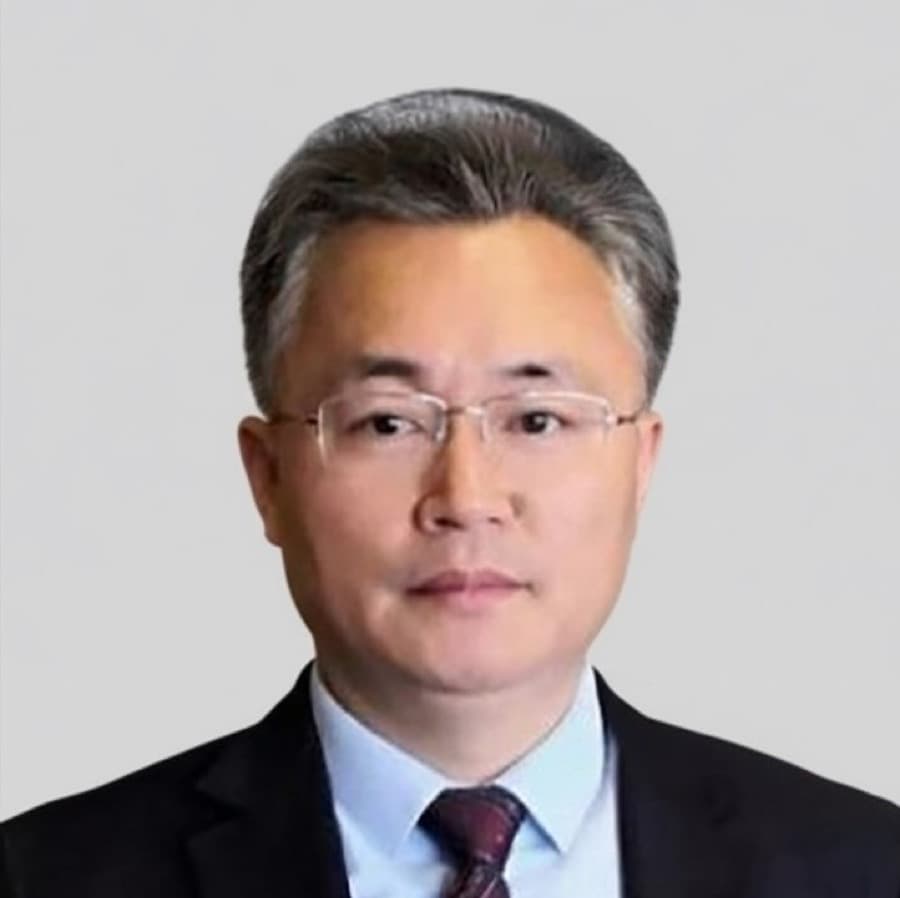
Prof. Gang Zheng
郑刚教授
天津大学副校长;ISSMGE TC219主席;中国土木工程学会土力学及岩土工程分会副理事长
Lecture
人工智能赋能岩土工程:应对复杂性与不确定性
AI-Empowered Geotechnical Engineering: Coping with Complexity and Uncertainty
Biography
嘉宾介绍
郑刚教授现任天津大学副校长、国际土力学与岩土工程学会技术委员会TC219主席,并担任中国土木工程学会土力学及岩土工程分会副理事长。他长期从事岩土结构体系性能、软土地层深基坑、软土条件下地下工程、桩基础和地基处理研究,被广泛认为是相关领域的重要专家。
郑教授先后主持国家973计划、国家重点研发计划和国家自然科学基金重点项目等重大科研任务。其科研成果曾获2019年度国家科学技术进步奖一等奖,2015年度国家科学技术进步奖二等奖,以及与基坑绿色支护技术相关的重要科技奖励。
他还因基坑开挖对桩基行为及承载能力影响方面的研究获得R. M. Quigley奖,在深基坑、地基处理及复杂环境岩土工程安全控制方面形成了具有重要工程影响的研究成果。
Lecture Abstract
报告摘要
中文内容根据会务组提供的英文Biography与Abstract整理。
复杂施工环境使岩土工程必须面对系统行为的高度复杂性与不确定性,尤其是现场监测数据往往具有非均质、稀缺和不完整等特点。人工智能赋能岩土工程旨在同时应对系统复杂性持续增加和工程数据不确定性这一组相互交织的挑战。生成式学习是其中的重要技术突破,使技术范式由以物理模型为主逐渐扩展至数据驱动和物理—数据融合。
通过整合现场实测数据、虚拟仿真数据和其他辅助数据,生成式学习能够缓解模型训练中的数据稀缺问题,提高复杂岩土行为预测的可靠性和效率。报告将介绍生成式人工智能在场地勘察、岩土系统行为计算和设计方案优化中的应用,重点涉及基坑和边坡工程,并详细介绍中国杭州某基坑采用智能预警技术的案例,说明人工智能在提高岩土计算精度和复杂环境施工安全方面的能力。
Biography — English+
Professor Gang Zheng is the Vice-Chancellor of Tianjin University, Chair of TC219 of the ISSMGE, and Vice President of the Chinese Institution for Soil Mechanics and Geotechnical Engineering. He is widely regarded as a leading authority in geotechnical engineering, with research focused on the system performance of geotechnical structures, deep excavation in soft ground, underground construction in soft soil conditions, pile foundations, and ground improvement. Throughout his career, Professor Zheng has led several major national research programs, including the National Program on Key Basic Research Projects (973 Program), the National Key Research and Development Program of China, and the Key Program of the National Natural Science Foundation of China.
His exceptional contributions have been recognized with numerous prestigious honors: the First Prize of the National Science and Technology Progress Award in 2019 for his work on theories, key technologies, and engineering applications of composite ground; the Second Prize of the same national award in 2015 for advances in safety control and cost-effective design of large and deep excavations; and the First Prize of the State Scientific and Technological Progress Award in 2014 for environmentally friendly supporting technologies for excavation. He was also the recipient of the R. M. Quigley Award in 2013 for his influential research on excavation effects on pile behaviour and capacity.
Abstract — English+
With the construction environment being complicated, the discipline of geotechnical engineering has to confront the significant complexity and uncertainty of system behavior, especially heterogeneous and scarce in-situ monitoring data. Artificial intelligence empowered geotechnical engineering aims to address the intertwined challenges of increasing system complexity and data uncertainty in current practice. Artificial intelligence provides a methodological framework and toolchain for the situation, and generative learning serves as a key technological breakthrough, with its technical paradigm shifting from the physics-driven to data-driven approach. By integrating real measurements, virtual simulations, and other supplementary data, generative learning methods overcome the constraint of data scarcity during model training and enable improvement in the reliability and efficiency of predicting complex geotechnical behavior. This presentation will introduce the application of generative artificial intelligence in geotechnical engineering, which spans site investigation, geo-system behavior calculation, and design scheme optimization mainly in excavations and slopes. An excavation in Hangzhou, China using the novel intelligent early warning technology will be introduced in detail, showing the capacity of AI for coping with the complexity and uncertainty of design and construction. The work has been shown to significantly enhance the accuracy of geotechnical calculation and contribute to safe construction in complicated environments.