
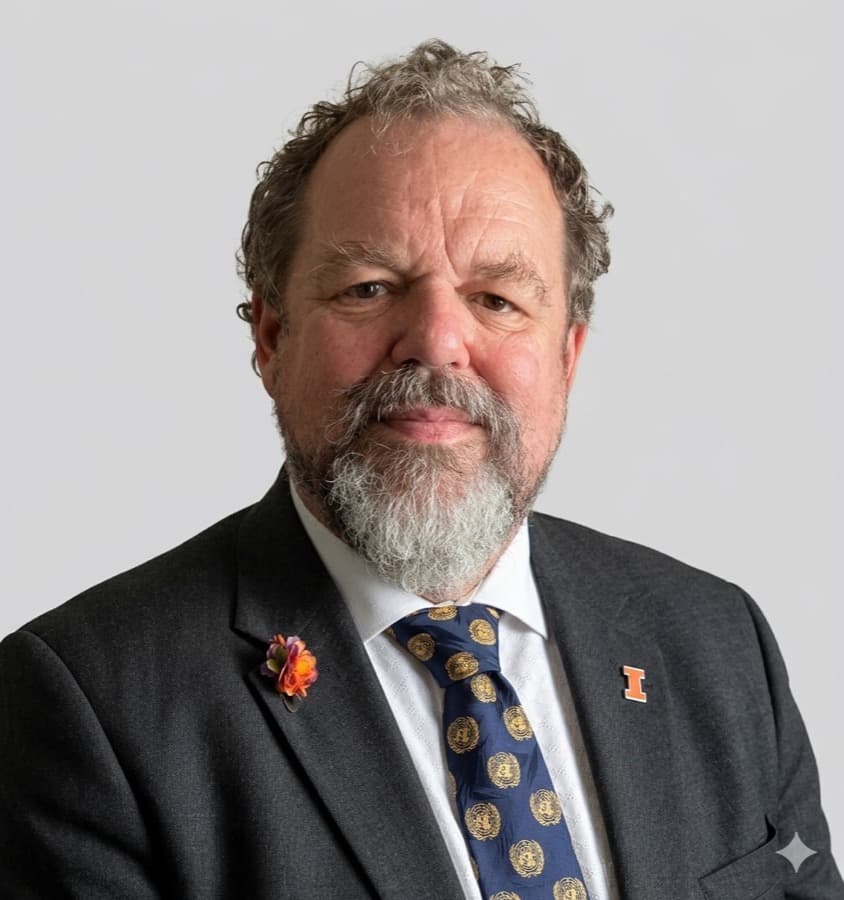
Prof. Arnold Dix
阿诺德·迪克斯教授
国际隧道与地下空间协会前任主席;澳大利亚大律师、工程师和科学家
Lecture
山体不会宽恕什么:越南基础设施建设时代地下工程安全中的灾害风险、沟通失效与人为条件
What the Mountain Does Not Forgive: Disaster Risk, Communication Failure, and the Human Conditions for Safe Underground Construction in Vietnam’s Infrastructure Era
Biography
嘉宾介绍
阿诺德·迪克斯教授是澳大利亚大律师、工程师和科学家,拥有30余年出庭律师执业经验。他于2022至2025年担任国际隧道与地下空间协会(ITA-AITES)主席,并主持ITA与国际原子能机构联合设立的地质处置设施特别兴趣小组。他曾担任国际律师事务所White & Case顾问律师,目前同时担任东京城市大学和印度浦那MIT世界和平大学访问教授,也曾在西悉尼大学和昆士兰科技大学任教。
2023年11月印度北阿坎德邦Silkyara喜马拉雅公路隧道坍塌后,他以无偿志愿专家身份抵达现场,成为救援行动的公共代表,并在极端复杂的岩土、媒体和政治环境中协调国际救援。经过17天行动,41名施工人员全部获救。他还曾担任澳大利亚Burnley隧道事故验尸调查特别调查员,并为伦敦Lakanal House和Grenfell Tower火灾调查提供咨询。
其博士研究关注工程危机结果为何往往并非取决于技术能力,而取决于压力环境下人类沟通的质量,以及什么样的法律条件能够支持专家诚实介入。他以Silkyara救援为核心案例撰写《The Promise》,并曾获澳大利亚年度人物维多利亚州决赛入围、蒙纳士大学杰出校友奖等荣誉。
Lecture Abstract
报告摘要
中文内容根据会务组提供的英文Biography与Abstract整理。
越南正在以前所未有的速度和规模推进地下基础设施建设,包括河内和胡志明市地铁、高速铁路隧道及大型土木工程项目。工程建设雄心十分明确,但围绕这些项目的社会管理体系——包括治理结构、应急响应框架,以及工程师、施工人员、决策者和公众之间的沟通渠道——是否与工程发展同步,仍缺乏足够关注。
报告认为,全球地下工程灾害与救援记录已经提供了清晰且可执行的证据,揭示了现有体系中的薄弱环节。通过对印度Silkyara隧道坍塌、切尔诺贝利、福岛核事故以及泰国Tham Luang洞穴救援等跨领域案例进行分析,报告指出,当地下工程发生紧急事件时,技术响应往往并非决定结果的唯一约束。工人能否获救、社区能否受到保护以及项目能否恢复,更大程度取决于沟通是否真实、责任是否落实到个人,以及专家能否在制度压力下及时说出事实。
报告将介绍作者根据博士研究和现场经验提出的“基于人类正当性的风险沟通框架”(HLRC)。该框架包括个人问责、技术可信度、关系接近性、对不确定性的诚实承认、制度压力下坚持真相以及法律保障六项条件,并结合越南地下工程治理环境提出应用方式。报告最后将针对越南地铁和高速铁路项目,提出在规划、合同和应急管理体系中嵌入灾害风险沟通标准的具体建议,使其成为安全地下施工的基础条件,而不是工程设计之后的附加事项。
Biography — English+
Arnold Dix is an Australian barrister, engineer, and scientist with more than 30 years of practice at the Bar. He served as President of the International Tunnelling and Underground Space Association (ITA-AITES, 2022–2025), the UN-recognised global peak body for underground engineering, and chairs the ITA–IAEA Special Interest Group on Geological Disposal Facilities (Radioactive Waste). He was Of Counsel to White & Case, and concurrently holds Visiting Professorships at Tokyo City University and MIT World Peace University Pune. He has held academic appointments as Associate Professor (Disasters) at the University of Western Sydney and Adjunct Professor at Queensland University of Technology.
He was the public face of the Silkyara Himalaya tunnel rescue (Uttarakhand, India, November 2023) — a 17-day operation in which 41 construction workers were freed from a collapsed Himalayan highway tunnel. Arriving as an unpaid volunteer, he coordinated the international rescue effort across extreme geotechnical, media, and political conditions. He has also served as Special Investigator to the Coroner for the Burnley Tunnel inquiry (Victoria, 2007–2011) and as an adviser to the Lakanal House and Grenfell Tower inquiries in London. His doctoral research examines why engineering crises are determined not by technical capability but by the quality of human communication under pressure, and what legal conditions enable honest expert intervention. His account of the Silkyara rescue, The Promise (Simon & Schuster, 2025), is the empirical centrepiece of that research. He was named Victorian Finalist, Australian of the Year 2026, and is the recipient of the Monash University Distinguished Alumni Award (2024), the NFPA Distinguished Committee Service Award (2022), and the Alan Neyland Award (2011).
Abstract — English+
Vietnam is building underground at a pace and scale that is genuinely remarkable. Metro systems in Hanoi and Ho Chi Minh City, high-speed rail tunnels, and major civil infrastructure projects represent one of the most ambitious underground construction programmes in Southeast Asia. The engineering ambition is clear. What receives less attention is whether the social management systems surrounding that construction — the governance structures, the emergency response frameworks, the channels of communication between engineers, workers, decision-makers, and the public — are developing at the same pace as the projects themselves.
This paper argues that they are not, and that the global record of underground construction disasters provides specific and actionable evidence about where the gaps lie and what must be done.
Drawing on a cross-domain analysis of major underground construction failures and rescues — including the Silkyara Himalaya tunnel collapse (India, 2023), Chernobyl (1986), Fukushima (2011), and the Tham Luang cave rescue (Thailand, 2018) — the paper identifies a recurring pattern that transcends geology, project type, and national context. When underground emergencies occur, the technical response is rarely the binding constraint on outcome. What determines whether workers survive, whether communities are protected, and whether projects recover is the quality of human communication: honest, personally accountable, and free from the institutional pressures that in many documented cases have produced managed silence at precisely the moment when truth was most needed.
The paper introduces the Human Legitimacy-Based Risk Communication (HLRC) framework, developed through the author’s doctoral research and field experience, as a practical contribution to Vietnamese underground construction governance. The framework identifies six conditions for effective expert crisis communication — personal accountability, technical credibility, relational proximity, honest uncertainty acknowledgement, truth-telling under institutional pressure, and legal enablement — and applies them to the specific governance context of Vietnam’s expanding underground programme.
The paper concludes with concrete recommendations for embedding disaster risk communication standards into the planning, contracting, and emergency management frameworks of Vietnam’s metro and high-speed rail projects — not as an afterthought to engineering design, but as a foundational condition of safe underground construction.